Zahle · Bekaa · Lebanon
Every buildingin Zahle,inspected.
In Lebanon, buildings fall on the families living inside them, and almost no one has the records to see it coming. I built a shared record of every building in my hometown, and a safety check that Red Cross volunteers can run after an earthquake, with Claude beside them.
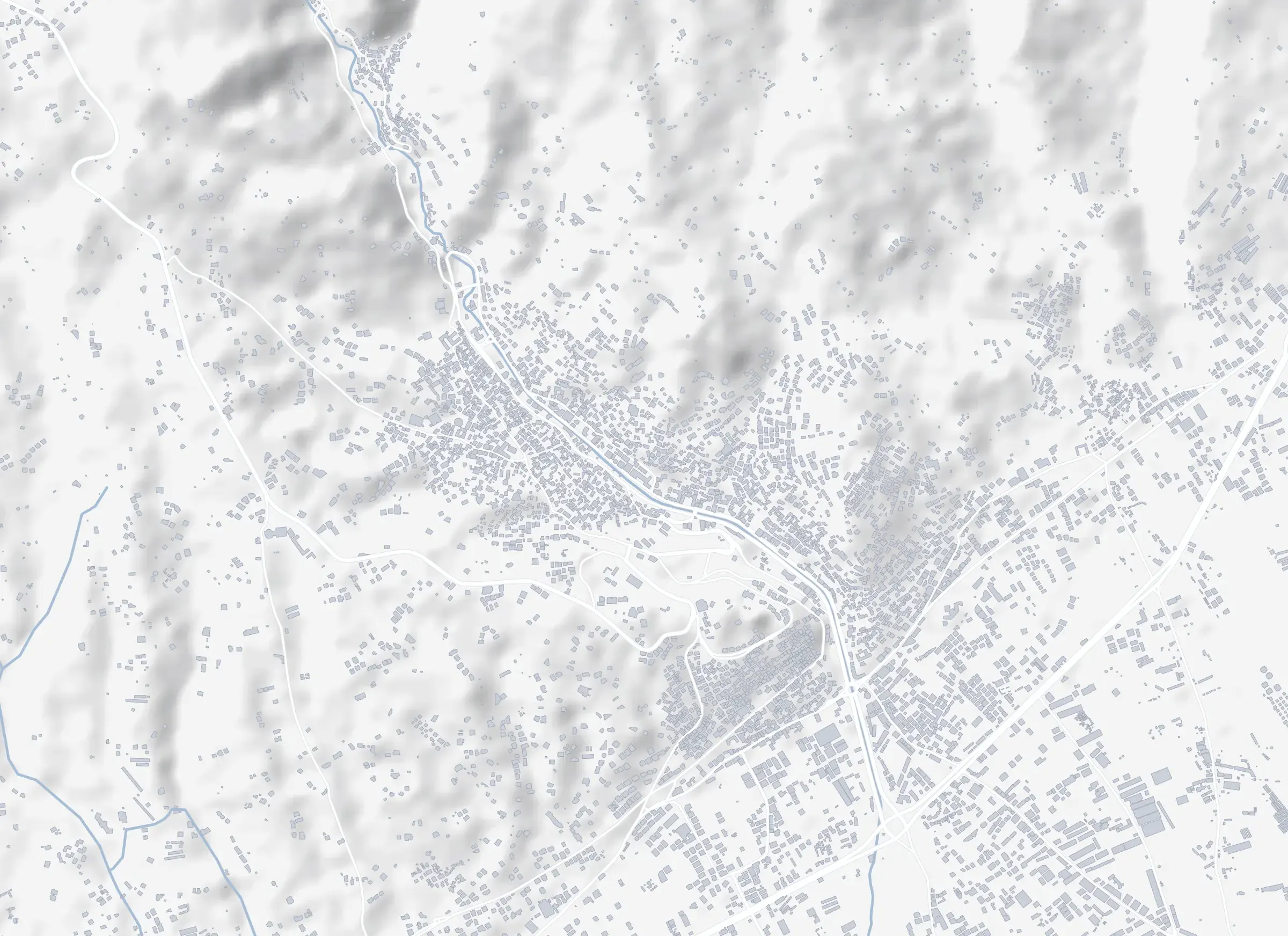
Zahle, 945 m up, on the Berdawni river.
4,595 buildings, every one on the map.
Each one keeps its whole history. Nothing is overwritten.
On 8 February 2026, a six-storey building in Bab al-Tabbaneh, Tripoli, came down on the people living in it. Thirteen died. One of them was three years old.
Lebanon Health Ministry 2
building collapses in Lebanon in the first five weeks of 2026. 1
buildings across Lebanon estimated to be at risk of collapse. 3
the 1759 earthquake that ruined the Bekaa, Zahle's valley. The faults are still there. 5
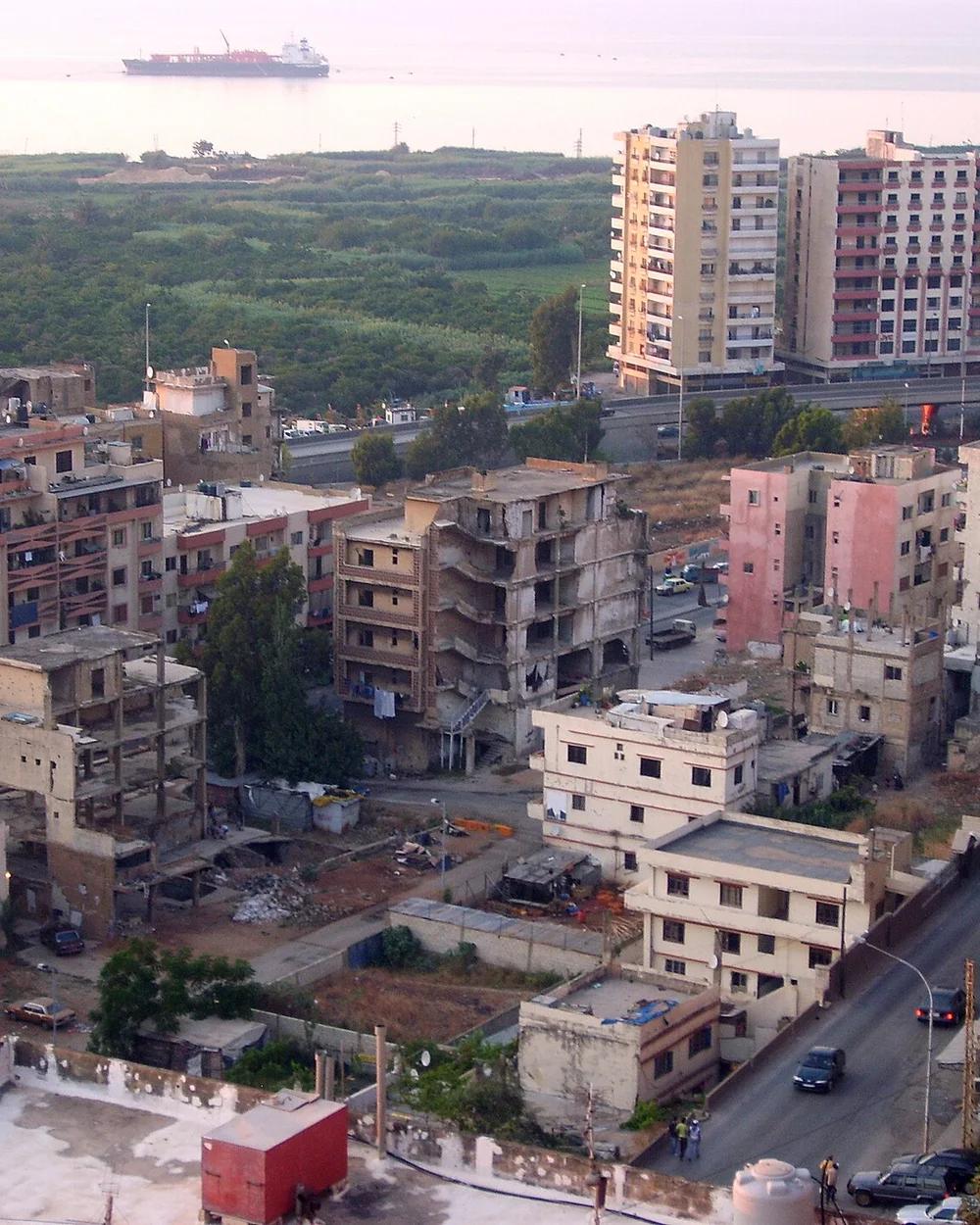
Some of the buildings that fell in Tripoli were not on any risk list. There was no money to inspect them in detail. 4
The records that would warn us sit on paper in municipal offices, or were never made. Every engineer who inspects a building starts from zero.
I watched too many people be buried under rubble, and decided to rally my brightest classmates to stop this. This is only the beginning.
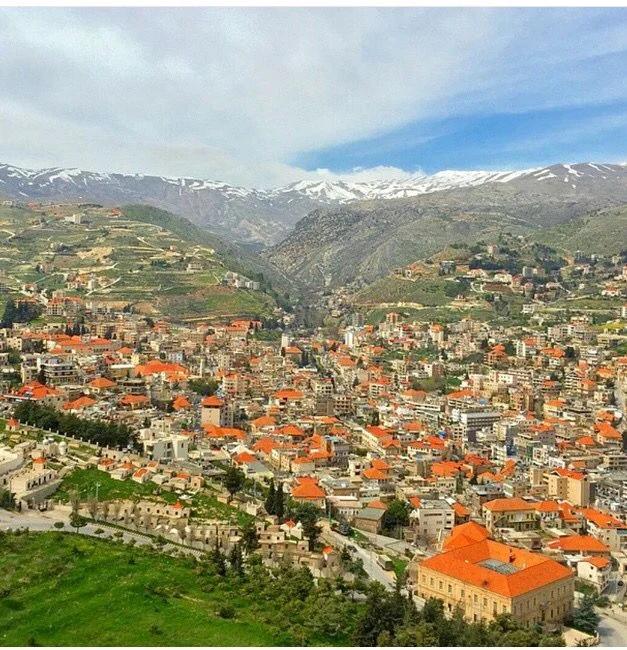
Zahle is where I was born and raised, in Rassieh. I know its streets, its stone houses and the people who would have to use this.
I've worked with the Zahle municipality and the Red Cross Zahle Center, so this can actually reach the people who'd use it.
What engineers told us
We talked to engineers in Lebanon before writing a line of code. They said the same three things.
- 01
The records are missing.
Most inspections are on paper, in an office, or nowhere.
- 02
Every inspection starts from scratch.
The same building is checked again and again, by people who can't see the last visit.
- 03
A shared record would help.
One place, kept by engineers, that the next engineer can read.
After an earthquake, the first question is simple: can people go back inside?
ATC-20 is how engineers in the United States have answered it since 1989. An inspector walks around the building, checks the few things that kill people (a leaning frame, broken columns, a falling facade, a shifted foundation) and puts one of three signs on the door. 6
It was written for volunteers, and first tested after the Loma Prieta earthquake in California. 7
No apparent danger. People can use the building.
Some danger. Enter only where and when allowed.
Do not enter. It may fall.
Why it saves lives
It sorts a whole city fast. People stay out of the buildings that could fall in the aftershock, families go home to the ones that won't, and engineers go first to the worst.
ATC-20 was written for American buildings. We rewrote it for ours.
- 01
Scene safety first
Gas, fire, live wires, falling rock. If any is there, the check stops and the app orders evacuation.
- 02
Lebanese buildings
The seven ways buildings here are actually built, from traditional stone to a concrete frame on an open ground floor, and Lebanese addresses down to the cadastral plot.
- 03
22 checks, each explained
Every check is rated None, Moderate, Severe or Not seen, with one line saying what each level looks like. No guessing.
- 04
Photos at every step
Outside, then inside if it's safe to go in. Claude reads every photo.
- 05
An actions page
Shut off gas and power, call Civil Defense or an engineer, from the same phone.
The missing piece
The Order of Engineers once looked at having Red Cross volunteers do these first checks. The technology wasn't ready: a volunteer isn't a structural engineer. We built what was missing.
One record, opened from two sides.
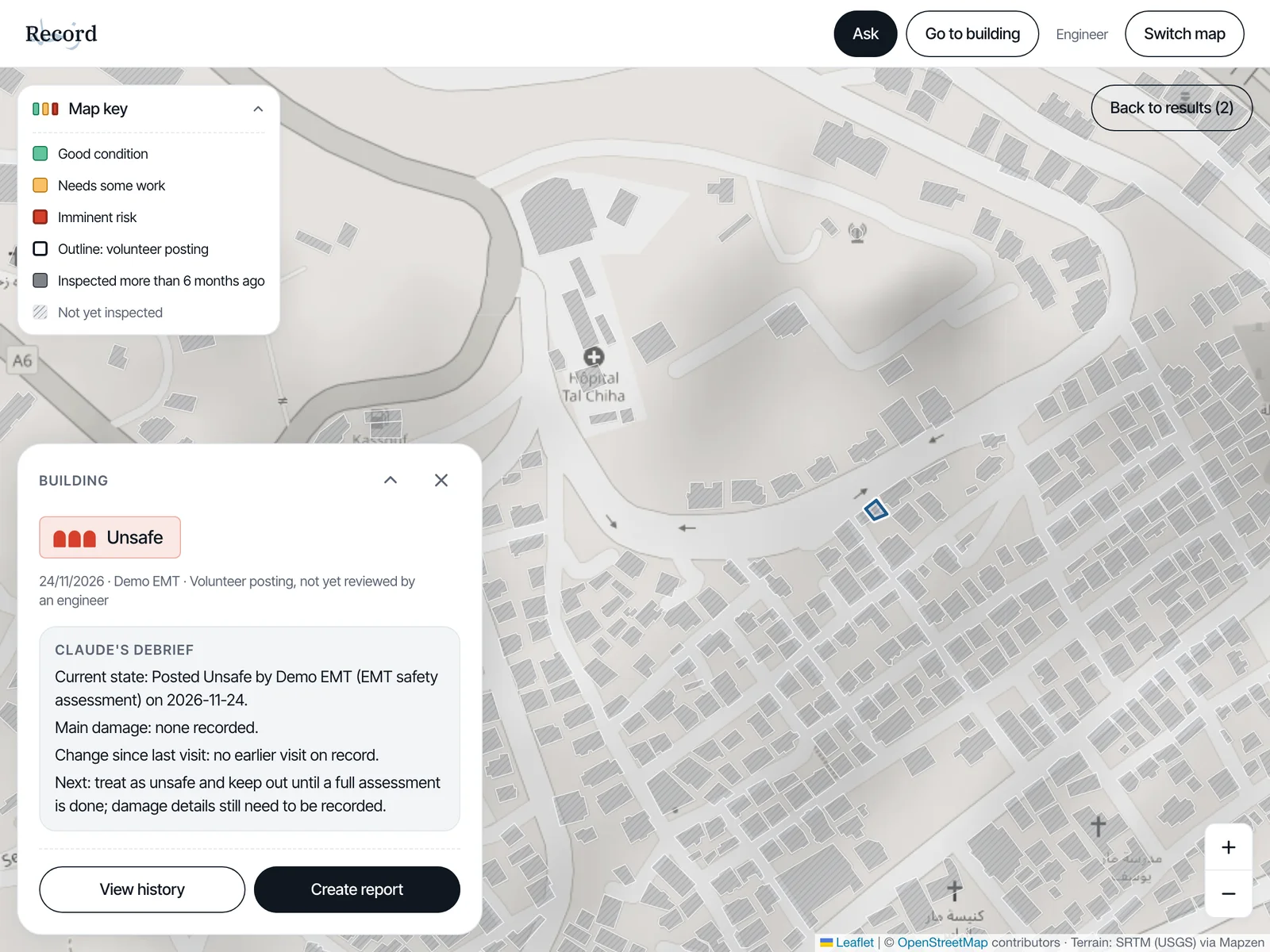
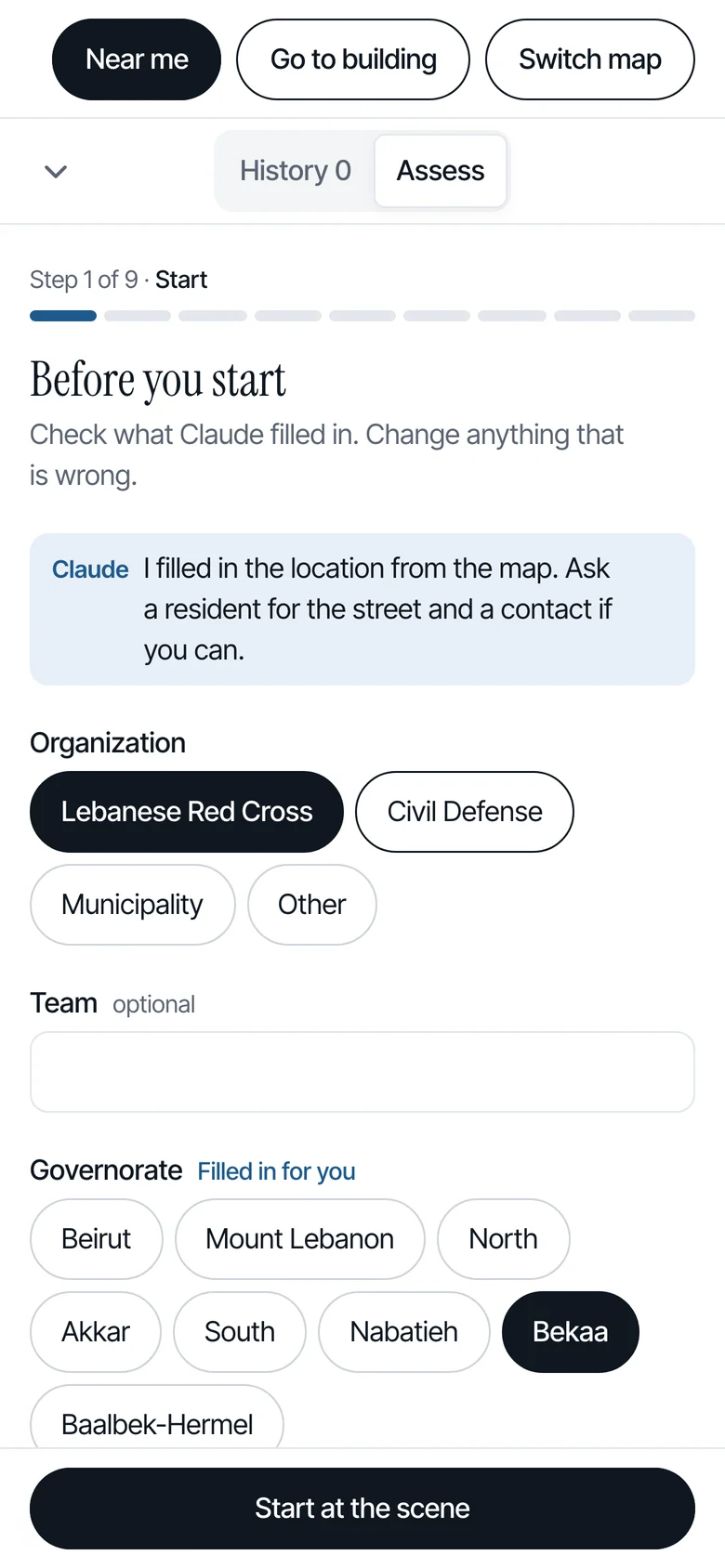
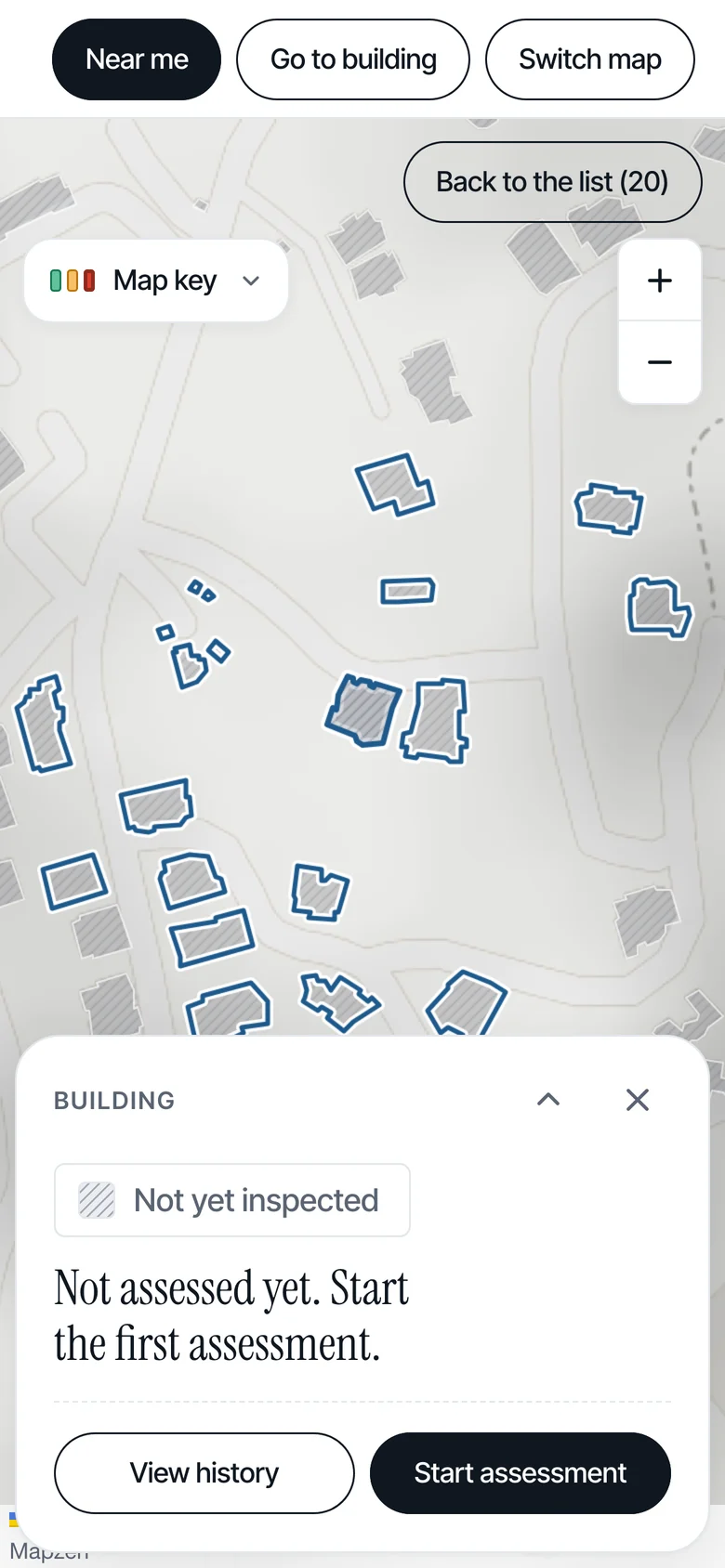
Near me.
A volunteer team picks how long is too long: a week, a month, six months, a year. The map lists 20 buildings nobody has visited in that time, or ever, and outlines them. Nearest first, but danger pulls a building forward: one last posted unsafe counts as four times closer. A team in the street knows which door is next.
Claude does the part a volunteer can't.
A volunteer can walk around a building and take photos. Reading structural damage in those photos takes an engineer's eye. That is where Claude comes in, and a person still accepts or changes every answer.
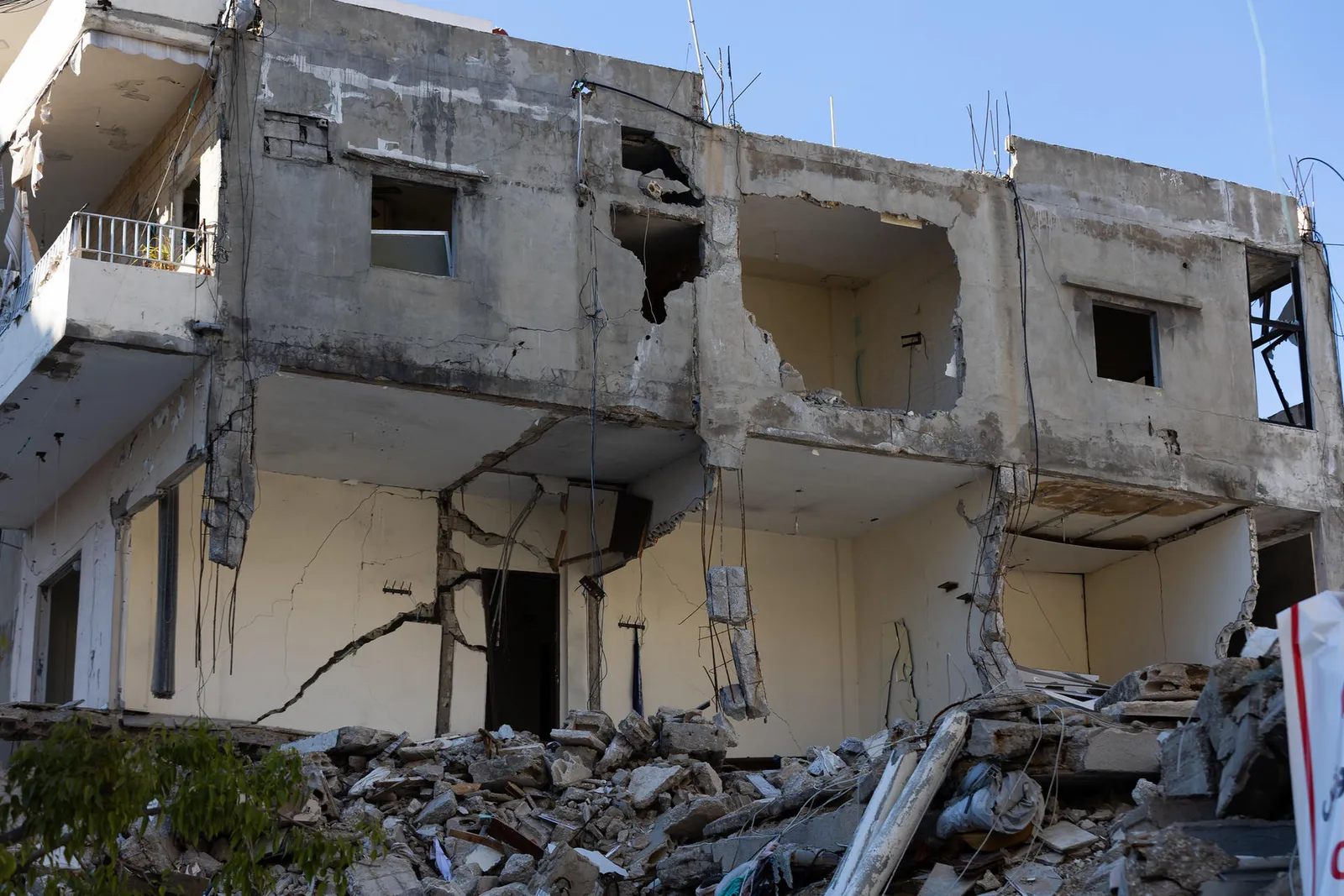
Claude's sketch of this photo, as the app draws it from Claude's answer. Not retouched.
It draws what it sees.
For each photo, Claude draws a line sketch of the facade, the way an engineer would in a field report, and marks every damage with its check number. It draws only what is visible: no invented floors, no hidden sides.
Reads every photo
Claude rates the damage it sees against the 22 checks, and gives one sentence the volunteer can check against the photo.
Guides the walk
After each photo, Claude says what to photograph next, so nothing important is missed.
Writes the debrief
Two to four lines at the top of each building's history, so the next person knows where to look.
It reads every past report, then hands over the list.
Before anyone opens a building, Claude has read its whole record, every engineer report and every volunteer posting, and written what to do next. That line sits beside each building in the priority list.
Engineers can also just ask, in plain words. Claude turns the question into filters, and the app shows exactly how it read it. Claude never sets the order: the formula below does.
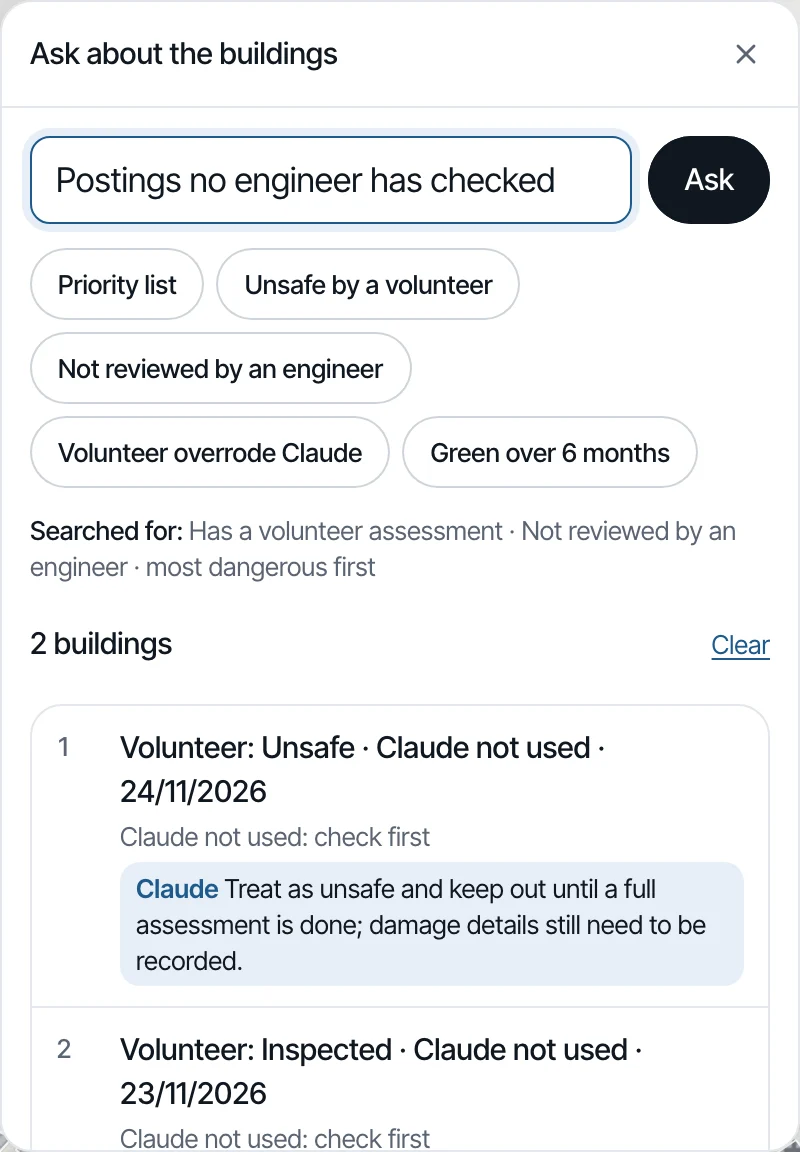
How buildings are ranked.
One written formula orders every list in the app, from the priority list to an engineer's question. Nothing is hidden. These are its steps, in order.
- Evacuations first: a volunteer assessment that stopped with “Order evacuation”.
- Then volunteer postings a person decided alone: Claude was not used, or the volunteer overrode Claude. These are ranked by the worse of the two postings.
- Then volunteer postings Claude agreed with.
- Then buildings an engineer has reported on since: red, yellow, faded green, green.
- Inside each group: the colour (red, yellow, green), then the damage estimate, then the number of people inside, then Claude’s confidence. For red and yellow, the surer Claude is, the higher; for green, the less sure, the higher. Unknown damage or people rank below known numbers but above zero. Ties: the building waiting longest since its last visit.
Buildings never inspected are not ranked unless a question asks for them.
Where it could be unfair
Any ranking of people's homes can carry bias. These are the ones we know about, so nobody has to guess.
- It only ranks what's on record. A building nobody has inspected isn't ranked at all, so a neighbourhood that gets fewer visits shows up less. Asking for “not yet inspected” brings them back.
- Uncounted people count for less. When nobody counted the people inside, the building ranks below one where even a few were counted. A full building nobody counted can sit below a half-empty one.
- Claude's confidence is its own guess. It isn't a measured accuracy. It only orders buildings inside one group, and only where the volunteer agreed with Claude.
- Near me's weights are our choice. Unsafe counts as four times closer, restricted use twice, never inspected one and a half times. Other numbers would send teams to other doors.
- Decisions made alone go up, not down. A posting made without Claude, or against it, is checked before one Claude agreed with. A single opinion gets a second one first.